

Opening your mail to find a notice that your Medicare Advantage or Prescription Drug plan is being discontinued can feel like the rug has been pulled out from under you. You might be wondering: Did I do something wrong? Why is this happening? And what do I do now?
First off, take a deep breath. You are not losing your Medicare. But you do need to take action—and the absolute easiest way to handle it is by looping in your insurance broker right away.
Why Did Your Carrier Drop Your Plan?
Every year, insurance companies reevaluate their contracts and operating costs behind the scenes. Plans get dropped or modified for a few common business reasons:
-
Changes in Service Areas: Carriers often decide to pull out of specific counties or zip codes where operating costs or medical provider network expenses have spiked.
-
Corporate Restructuring: Insurance companies frequently merge, streamline, or eliminate unprofitable plans to balance their portfolios.
-
Non-Renewal with Medicare: Sometimes a carrier chooses not to renew its contract with the federal government, meaning that particular plan legally cannot exist for the upcoming year.
When this happens, it is entirely a business decision made by the insurance company—it has nothing to do with your personal health or claim history. However, federal rules require carriers to mail you a Non-Renewal or Termination Notice (usually in the fall) to give you plenty of time to transition.
Step 1: Don’t Throw Away Your Plan Termination Notice!
When your plan is discontinued, your carrier will send you a Notice of Non-Renewal or Termination Notice.
Important: Save this letter and its envelope. This document serves as official proof that your plan was discontinued involuntarily. You will need this letter to qualify for Guaranteed Issue Rights if you decide to buy a Medigap (Medicare Supplement) policy.
Step 2: Understand Your Enrollment Windows
Because your plan is ending through no fault of your own, you receive special protection:
-
Fall Open Enrollment / AEP (October 15 – December 7): You can use the standard Annual Election Period to pick a new Medicare Advantage or Part D plan that takes effect on January 1st.
-
Special Enrollment Period (SEP): You are granted an extra Special Enrollment Period because your plan ended. This window typically runs from December 8 through the last day of February.
-
Note: If you wait until January or February to select a new plan, your new coverage won’t start until the following month, leaving you temporarily on Original Medicare without drug coverage. Selecting your new plan before December 31 ensures zero gaps in coverage.
-
What Happens If You Do Nothing?
If you do not choose a new plan before your current one ends on December 31st:
-
You will automatically revert to Original Medicare (Part A and Part B) on January 1st.
-
You will NOT have prescription drug coverage unless Medicare auto-assigns you (applicable if you qualify for Extra Help/Low-Income Subsidy).
-
You will be responsible for Original Medicare’s deductibles and 20% coinsurance without an out-of-pocket maximum.
-
Checklist: How to Go About Changing Plans
Checklist: How to Go About Changing Plans
-
Review your termination letter and verify the exact date your plan stops.
-
List your priorities: Make a list of your current doctors, medications, and preferred pharmacies.
-
Work with an Independent Medicare Specialist: Navigating networks, drug formularies, and Guaranteed Issue rights on your own can be confusing. A licensed independent agent can guide you through all options at no added cost.
- Compare local plans: Look at other Medicare Advantage or Part D plans offered in your ZIP code.
Why You Should Call Your Broker Immediately
Trying to navigate new plan options, doctor networks, drug formularies, and enrollment deadlines on your own can quickly become an overwhelming headache. That’s why you don’t have to figure it out alone.
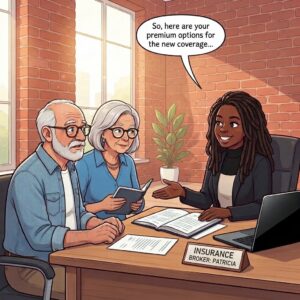
Your best move is to pick up the phone and make an appointment with your broker.
When your plan is discontinued, you are given special enrollment protections. Your broker’s job is to take the stress off your shoulders, look at your specific medications and doctors, and handle the paperwork for you.
Here is what your broker will do when you sit down or call for an appointment:
-
Review Your Notice: They will look over the termination letter you received to ensure you meet all the criteria for your special transition windows and any special rights (like Guaranteed Issue for Medigap policies).
-
Audit Your Doctors and Meds: They will check which alternative Medicare Advantage or stand-alone drug plans in your area actually cover your preferred physicians and current prescriptions.
-
File Your New Application: Once you decide on the right fit, your broker will handle the filing for you. They will submit your new enrollment application correctly, ensuring there are no gaps in your healthcare coverage.
Don’t Wait Until the Last Minute
If your plan is ending, ignoring the letter or waiting until the final hour can lead to a stressful lapse in your extra benefits or drug coverage.
What should you do right now? Find that termination letter in your mail, grab your current list of medications, and schedule an appointment with your broker today. They will cut through the confusion, answer your questions, and get you re-enrolled in a solid plan so you can have complete peace of mind.
Life and Med
216 N. 3rd St., Suite B
Leesburg, FL 34748
Call or text: 352-260-0202
Contact Life and Med to discuss your Medicare needs and take the next step.